Murky pond water: find the cause, then clear it
Cloudy water has more than one cause. If it's suspended organics or an algae haze, oxygenation helps directly: aerobic breakdown clears the load and fine particles settle out. If it's stirred-up clay or bottom-feeding fish, that's a different problem oxygen won't fix. The first step is telling which one you have, by measurement.
What’s actually happening in your water
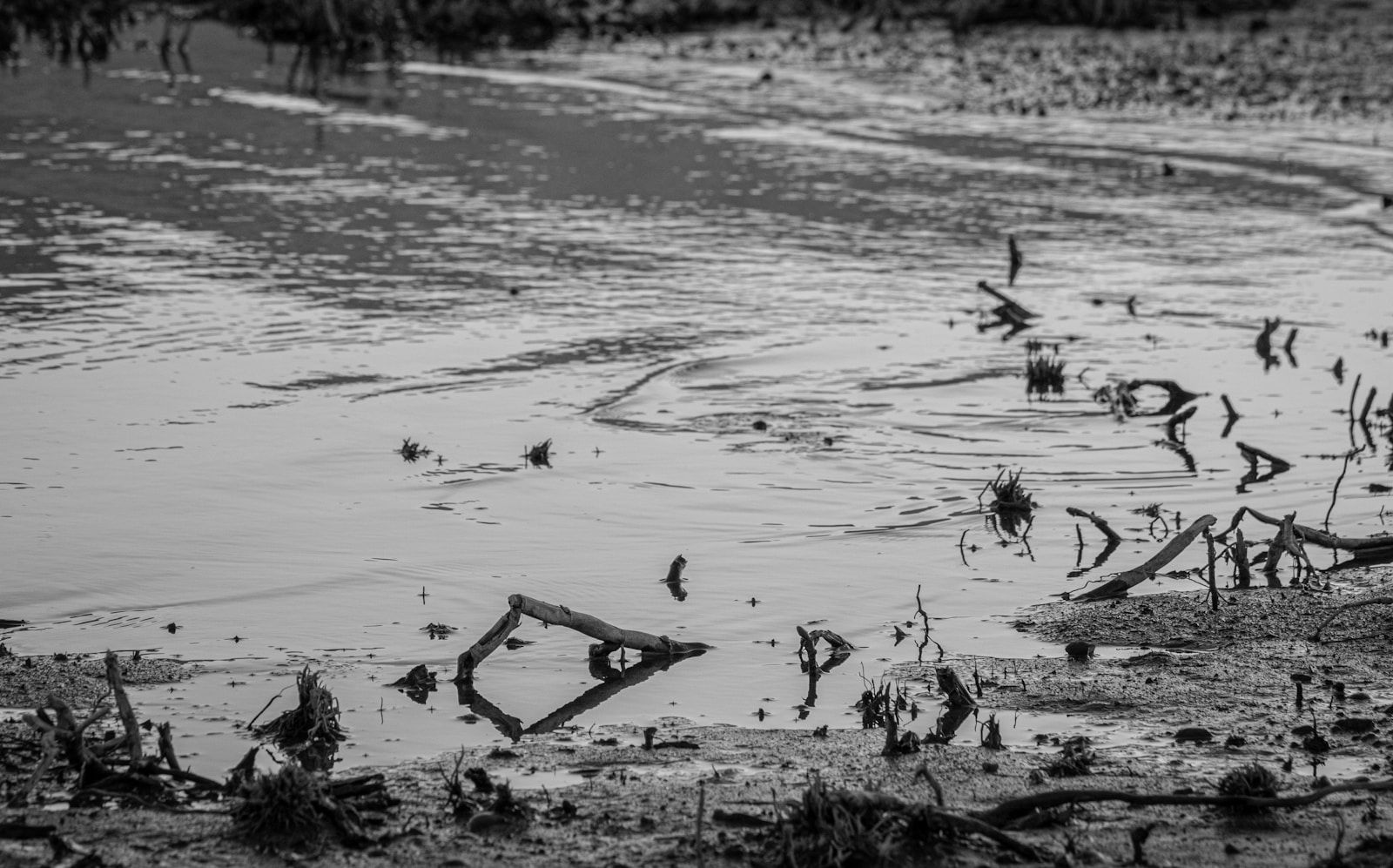
Murky water is a look that several different problems share, and they don’t respond to the same fix.
Broadly, there are two families. The first is biological: suspended organics and a haze of algae. This is fine material kept aloft because the pond’s aerobic breakdown has slowed, so the water carries more than it should. This family responds to oxygen. The second is physical: suspended clay, or sediment that bottom-feeding fish keep stirring up. Clay stays cloudy because of how its tiny particles carry charge and resist settling. A carp keeps the bottom in motion no matter what the chemistry does. Oxygen doesn’t reach either of those.
Because the two look alike from a dock, the first move is a measurement rather than a system. We read clarity as Secchi depth in feet and look at what’s actually suspended, so the plan matches the real cause.
Why the usual fixes don’t hold
Clarifiers and settling agents can drop particles out for a while. But if the real cause is a slowed, low-oxygen pond, the haze comes back. The symptom cleared and the condition stayed. And if the cause is clay or a bottom-feeder, a clarifier is working against physics that won’t budge.
The pattern is the one that runs through this whole site: treating what you can see, at the surface, while the reason sits somewhere the treatment never reaches. That is why diagnosis has to come first here, more than anywhere else.
How restoration works here
Where the cloudiness is organic, restoring oxygen changes it at the source. Nanobubbles carry oxygen through the full water column, including the sediment, so aerobic breakdown speeds up and the suspended organic load falls. The fine bubbles also help fine particles settle and clear over time.
What it does not do is clear clay or out-muscle a bottom-feeder. That is the value of measuring first: if the clarity curve moves, the cause was organic and the plan is working; if it plateaus, the reading tells us the rest is physical. What we measure and how is published. When the number says our fix isn’t the right one, the report says that too.
What to expect, and when
Weeks 2-4
If the cloudiness is organic, oxygen rises and the aerobic breakdown that clears it begins. We track clarity as Secchi depth in feet alongside the oxygen, so the two curves can be read together.
Weeks 6-12
Clarity improves gradually as organics break down and fine particles settle. Clay-based cloudiness won't follow this curve. That gap is itself part of the diagnosis.
Season 1
A full season shows whether the clarity holds through the warm months. If it plateaus, the reading tells us the remaining cloudiness isn't an oxygen problem, and we say so.
The record
We don't have a published case file for this problem yet. Every Alchemal installation is instrumented from day one, so the first case files are being measured now, and until one is ready, our methodology shows exactly what we record and how we report it.
When this isn't the right fix
- If the water is brown from suspended clay, oxygenation won't clear it. Clay stays in suspension for physical reasons rather than biological ones. We identify it and tell you.
- If bottom-feeding fish like carp are constantly stirring the sediment, that's a mechanical problem. Oxygen doesn't settle what a fish keeps kicking back up.
- Right after heavy rain, a pond can cloud from incoming runoff and usually clears on its own. The assessment separates a passing event from a standing condition before anyone proposes a system.
Questions people ask
Why is my pond water brown or cloudy?
There are a few common reasons, and they don't share a fix. Suspended organics and an algae haze make water look green or tea-brown, and those respond to oxygen. Fine clay makes it look muddy and stays that way for physical reasons. Bottom-feeding fish can keep sediment stirred up. Telling them apart is the whole point of a diagnosis.
Is cloudy water the same as an algae problem?
Sometimes. An algae haze is one cause of cloudiness, and it responds to changing the conditions. But clay turbidity and stirred-up sediment look similar and are different problems. A quick measurement of clarity and what's suspended settles which one you're actually looking at.
Will oxygenation clear muddy water?
Only if the cloudiness is organic. Where the haze is suspended organics or algae, restoring oxygen speeds aerobic breakdown and helps fine particles settle, and clarity improves over weeks. Where the brown is clay, oxygen won't touch it. That's a physical suspension, and we'll tell you so rather than sell you a system for it.
How do I tell clay cloudiness from organic cloudiness?
A simple jar test is a start: fill a clear jar and let it sit a day. Organic particles and settled clay behave differently over time, and a clarity reading against the season fills in the rest. The assessment does this properly, so the plan matches the actual cause instead of guessing.
How long until the water clears?
When the cause is organic, most ponds show measurable oxygen change in the first few weeks and visible clarity change over the following weeks, depending on depth and load. We measure clarity as Secchi depth, so you watch the number move rather than judging it by eye on a changing day.
Tell us what your water is doing.
A specialist reads your description and replies in writing: what it usually means and what we would measure first.