Pond algae: fix the conditions that favor it
Algae takes over when a pond's conditions favor it: low oxygen at depth, warm stratified water, and nutrients releasing from anoxic sediment. Chemicals remove the symptom and feed the next bloom. Nanobubble oxygenation restores oxygen through the full water column, so the pond's own biology outcompetes the algae. We measure the change week by week.
What’s actually happening in your water
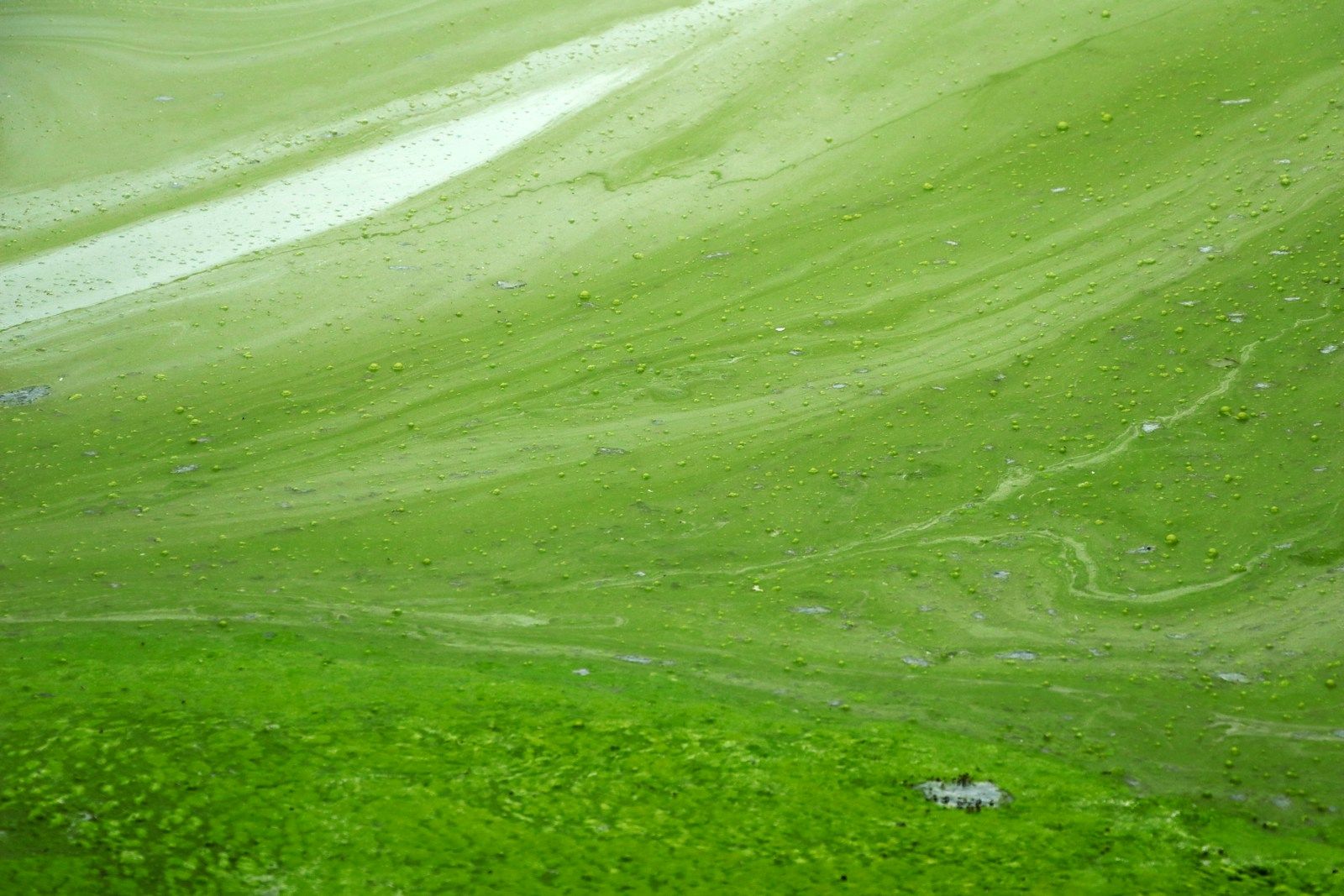
Algae blooms when the pond gives it an advantage. Three conditions set that up:
- Low oxygen at depth. Warm water stratifies in layers; the bottom layer stops mixing with the surface and its oxygen runs out.
- An anoxic bottom. Once the sediment interface has no oxygen, it starts releasing the phosphorus and nitrogen stored in the muck: a nutrient feed rising directly into the water.
- Warmth and light. In a warm, still summer, algae grows faster than anything else in the pond.
None of this is unusual. Any pond does this when its deep water runs out of oxygen. That is why the fix starts with the oxygen rather than with the algae.
Why the usual fixes don’t hold
Algaecides work as labeled: they suppress the bloom you can see. They don’t change any of the three conditions above. The dead mat sinks, decomposition consumes what oxygen is left and releases the nutrients the mat was holding, and the pond is now better set up for the next bloom than it was before this one. That’s why the jug comes out every month. Most of the pond owners who write to us have a shed full of them, bought in good faith. The chemicals did what the label said. They were never going to do more.
Surface aerators and fountains help the water they can reach, and that’s mostly the top. The bloom’s advantage forms at depth, at the sediment, where a fountain’s spray never goes. How that differs from nanobubbles is worth five minutes if you already run an aerator.
How restoration works here
Nanobubbles are oxygen bubbles roughly 2,500 times smaller than a grain of salt. Bubbles that small don’t rise and burst. They stay suspended for weeks, so oxygen reaches the full water column, including the sediment interface at the bottom.
With oxygen held high top to bottom, three things shift:
- The sediment stops releasing nutrients, because its surface turns aerobic. The feed dries up.
- The pond’s own aerobic biology speeds up, consuming the organics that anaerobic decay was leaving in place.
- The algae loses the conditions it depends on. Nothing is poured on the mat. It’s outcompeted, and it recedes.
We install the system, and Stewardship carries it from there: service visits, sensor checks, and a measured record of the recovery. What we measure and how is published. Every claim on this page is either mechanism or measurement.
What to expect, and when
Weeks 2-4
Dissolved oxygen moves first. Most ponds this size show a measurable change within the first month. We measure weekly, so you'll know which curve yours is on.
Weeks 6-12
Visible change. Water clears gradually as the bloom loses its advantage; the exact pace depends on depth, nutrient load, and starting condition. The water can look worse for a stretch early on, as material lifts off the bottom. We'll warn you before it happens.
Season 1
Full confidence. One complete warm season tells us whether the bloom that used to arrive on schedule still can. We keep measuring either way.
The record
We don't have a published case file for this problem yet. Every Alchemal installation is instrumented from day one, so the first case files are being measured now, and until one is ready, our methodology shows exactly what we record and how we report it.
When this isn't the right fix
- If external nutrient loading is severe (fertilizer runoff, gathering waterfowl, drainage from surrounding land), oxygenation alone won't hold. We'll say so in the assessment and address the source in the plan.
- If what's taking over is rooted weeds rather than algae, oxygenation is a supporting measure at best. Many people say "weeds" and mean filamentous algae, and the other way around. The assessment settles which one you have.
- If the bloom is blue-green and anyone's skin, pets, or livestock touch the water, treat it as a safety matter first: keep people and animals out, and contact your state environmental agency. Only testing can confirm toxicity. Restoration is for the seasons after, once the water is safe.
Questions people ask
How do I get rid of pond algae without chemicals?
Change the conditions the algae depends on. Algae dominates when deep water runs out of oxygen and nutrients cycle up from the sediment. Restoring oxygen through the full water column, all the way to the bottom, shifts the advantage back to the pond's own biology. It's slower than an algaecide and it holds, because nothing about the pond still favors the bloom.
Why does my pond algae keep coming back after treatment?
Because the treatment removes the bloom and leaves the reason for it in place. The dead mat sinks, decomposition consumes oxygen and releases the nutrients the mat held, and conditions are now better for the next bloom than before. That's the monthly cycle. Breaking it means changing the conditions themselves.
How long does it take to clear a green pond?
Most ponds show measurable oxygen change in 2-4 weeks and visible change in 6-12, depending on depth, nutrient load, and season. One full season gives real confidence. We measure weekly, so you won't be waiting blind. If the curve isn't moving, you'll hear it from us first.
I've tried everything. Why would this work?
Most of what's sold for algae treats the water from the top, and the problem forms at the bottom, where oxygen runs out and sediment feeds the bloom. If you've been treating monthly, each treatment has been resetting that cycle. We don't ask you to take this on faith. An assessment starts with a measurement, and you judge the approach by your own water's numbers.
Is pond algae dangerous to dogs?
It can be, if the bloom is cyanobacteria (blue-green algae). You can't tell by looking, and only testing can confirm toxicity. If you suspect a blue-green bloom, keep pets and people out of the water now and contact your state environmental agency, which can test it. Do that before anything else.
Tell us what your water is doing.
A specialist reads your description and replies in writing: what it usually means and what we would measure first.